Applications of Sandblasting Safety Equipment
- The purpose of the sandblasting safety equipment suits is to increase worker comfort and shield the user from abrasive rebounds.
- The sturdy apron with a protective cover and heavy-duty AC are made to keep you cool.
- Arms and leg fronts are further protected by heavy-strength nylon.
- It reduces noise by up to 20 to 40 dB.
Sandblasting Safety Equipment Details
Sandblasting has a number of health risks included from the abrasive media being used and the materials being blasted on the surface. Therefore there is various sandblasting safety equipment available for the operator’s safety while any sandblasting process. Things possible with our company for safety can be listed as follows:
- Sandblasting operator suit- Skin exposure or inhalation of toxins such as zinc, lead, and silica can lead to serious health problems, including silicosis, lung cancer, and breathing problems.
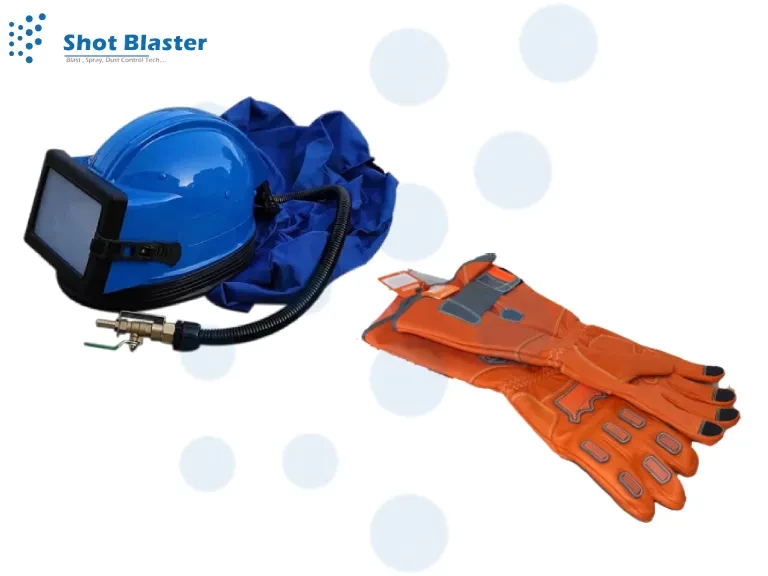
- Sandblasting helmet- Respiratory covering head, neck, & shoulders, ear, and eye protection
- Sandblasting hand gloves- for the protection of hands
- Safety shoes or gumboots
- Sandblasting air conditioners are used in helmets for the operators.
Sandblasting Operator Suit
- This is a special kind of one-piece protective clothing suit available for the operator while sandblasting any material or surface.
- On wearing, an operator is covered and protected fully against the flying abrasive media. With this operator’s safety measures are more as now abrasives cannot touch their skin and harm them physically.
- To provide the appropriate level of protection during every sandblasting application; garments, operator suits, and equipment recommended specifically for sandblasting should be used.
- Everyone in the area should wear all the necessary safety equipment, not just the operator working over there.
- Dust particles are still hazardous to health during cleaning of any surface and all safety clothing should continue to be worn.
Sandblasting helmet
- Air-supplied, sealed helmets are some of the most essential and important pieces of safety equipment and they should always be worn during the sandblasting process.
- Always use a sandblasting helmet that provides clean air to prevent inhaling microscopic dust particles.
- Helmets should be well fit – because those which are too big will not give an effective barrier and will let dust particles inside which would be harmful to the operator.
- We always use a helmet that provides perfect condition and has a high-quality filter to prevent fine particles from getting inside the sandblasting helmet.
- Gas Masks filter gases, some particles, and chemicals that are able to bypass the lungs and enter the system inflicting heaps of harm to one’s body.
Sandblasting Hand Gloves
- The operator should use gloves made from leather, neoprene, or rubber materials that are made specifically for the sandblasting operation to prevent flying abrasive particles from passing through the skin and from the static charges being generated.
- Sandblasting hand gloves are in long lengths which create a continuous hurdle that prevents dust from entering openings in clothing.
- Cabinet-style abrasive blasting gloves should be used when using a sand blasting cabinet, according to the cabinet manufacturer's recommendations.
Safety Shoes
- The gumboots are made of rubber used by the operator while sandblasting process to provide safety from abrasive media such as copper slag, garnet sand, aluminum oxide, etc.
- Safety shoes should always be worn to provide a hurdle between dust particles and impact from equipment or other materials that may be dropped on the foot.
- These are specially designed gumboots that provide a sturdy hold to the operator during the sandblasting process and even reduce the potential for accidents.
- To prevent the possibility of particles coming into contact with the operator’s skin or having an accident from slipping one should never wear their regular shoes while sandblasting process.
Sandblasting Helmet Air Conditioner
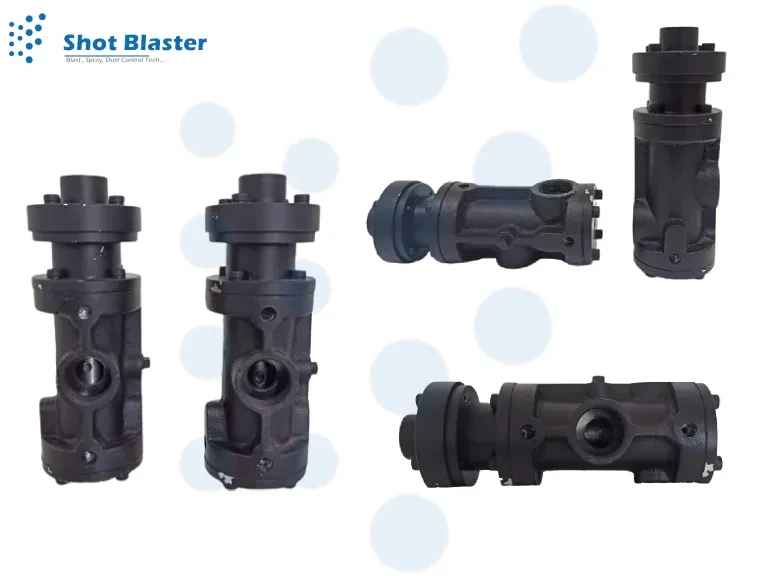
- The purified air from the air breather is inserted into the air conditioner, where it is conditioned and is again inserted into the helmet by using a sandblasting hose in sandblasting safety equipment
- The air conditioner shape is made a “vortex” where the air is whirled (rotated) and is divided into hot air and cool air.
- It is provided with a belt and is generally worn on the operator’s waist and is fully adjustable.
- It has an adjustable knob also which regulates the temperature of the air in the helmet.
- Whatever may be the working conditions of the sandblasting, it gives a healthy environment.
- Helmet air conditioners are self-driven and need no auxiliary, extra unit, or system.
- It is also lightweight in nature and no maintenance is required.
- By using our product, the operator will never get discomfort and thus saves from fatigue and dehydration problems also.